Best 5 ESG Reporting & Compliance Tools (2026): Features, Pricing & Drawbacks

Introduction
Many organizations now use structured ESG reporting processes to share information on their environmental, social and governance performance. ESG compliance refers to a set of guidelines and standards that a company implements in internal policies that are mandated by regulatory bodies. Investors, regulators and stakeholders increasingly expect transparency, so firms rely on reliable systems to track emissions, labor practices, governance structures, supply-chain conditions and financial links to sustainability.
The volume of ESG data continues to increase across departments and geographies, and spreadsheets often fall short when handling complex information under multiple ESG frameworks. The process of ESG compliance management can be challenging due to multiple ESG frameworks and standards.
Dedicated ESG reporting compliance tools provide centralized functions to collect information, analyze ESG factors, organize workflows and produce sustainability reports aligned with regulatory expectations.
This article explains what ESG compliance involves, why structured systems matter, and compares eight best-in-class solutions based on features, pricing, and potential drawbacks.
What ESG Compliance Means and Why Firms Prioritize It
Environmental, Social and Governance — What They Cover
ESG reflects operational behavior under three themes. The environmental dimension includes emissions, waste, resource efficiency, and the wider carbon footprint of activities. The ESG reporting process helps identify and manage potential risks related to climate change, supply chain vulnerabilities, labor disputes, and governance failures before they escalate.
The social dimension covers labor conditions, community welfare, diversity and inclusion, human-rights safeguards and occupational-safety practices related to occupational health.
Featured Article: What is the ESG movement all about?
The governance dimension relates to board oversight, ethics, policy frameworks, audit processes, transparency and wider corporate governance performance.
With multiple data points involved, organizations need well-structured data management practices to maintain accuracy and produce sustainability reports that reflect their ESG performance.
Why Companies Strengthen Their ESG Reporting Process
Investor expectations, regional rules and stakeholder questions push companies to refine their ESG reporting approach. Governments and regulatory bodies worldwide are increasingly mandating ESG disclosures, such as the EU's Corporate Sustainability Reporting Directive (CSRD) and the UK's TCFD-aligned rules. Many firms operate across countries with differing compliance requirements, so combining structured workflows with proper compliance management reduces the risk of poor disclosures or non-compliance.
Transparent information also supports long-term analysis, comparing emissions, workforce trends or governance decisions each year. Firms benefit from coherent risk management, reinforcing internal processes and responding clearly to regulators and the financial markets.
Common Global Frameworks Influencing ESG
Several region-specific and global frameworks guide how organizations present disclosures. The European Sustainability Reporting Standards (ESRS) require companies to report both their impact on society and how ESG factors affect their financial performance. Many firms adopt the Global Reporting Initiative, the Corporate Sustainability Reporting Directive, the General Data Protection Regulation, or sector-specific compliance frameworks.
Public rules from regulatory bodies encourage consistent data structures, whereas cross-border operations often require alignment with the European Union’s sustainability-reporting expectations. Large publicly traded companies also reference recognized reporting frameworks when preparing annual and financial reports, matching investor expectations for non-financial transparency.
Working with multiple ESG frameworks can be demanding, so structured data collection and integrated systems help maintain clarity.
Why ESG Compliance is Difficult — and How Tools Support the Work

Challenges Inside Organizations
Many firms manage large datasets from HR, operations, procurement, supply chains and risk teams. This volume requires consistent data management and rigorous controls to maintain data quality.
Collecting and validating information from numerous sources becomes complex, especially where complex regulations govern disclosures. Non-compliance with ESG reporting can result in substantial financial penalties and legal action. The burden increases when organizations need evidence of compliance, maintain audit trails and store files securely to meet data security expectations. Without proper systems, poor record-keeping can lead to poor compliance, reputational risk or regulatory penalties.
Featured Article: 7 Game-Changing Sustainable Supply Chain Management Solutions for Greener Operations
Why Dedicated ESG Reporting Solutions Help
Modern tools track information consistently, automate tasks, and support corporate sustainability decision-making. These platforms centralize data, organize workflows, and provide structured pathways to collect ESG data.
Firms producing sustainability reports or preparing annual reports find it easier to align disclosures with investor needs and region-specific regulations. Pre-built templates and guidance for global reporting standards simplify compliance with diverse regulatory requirements in ESG reporting. Good systems help teams manage roles, schedule compliance activities, maintain internal controls, review evidence, and validate information before final reporting.
Some tools also integrate functions for environmental protection, ethics training and safety administration, strengthening organization-wide processes. The result is a more cohesive ESG strategy, smoother reporting, reduced risk of non compliance, and the ability to manage risk effectively.
What to Look for in ESG Reporting & Compliance Tools
Support for Multiple Frameworks
Tools should support various ESG frameworks so users can adopt structures matching their region, industry or stakeholder expectations. This flexibility matters for firms dealing with evolving regulations, industry-specific rules or investor requests referencing several reporting models.
When firms follow the corporate sustainability reporting directive or align with the Global Reporting Initiative, multi-framework compatibility simplifies the reporting process.
Data Collection and ESG Data Management
The software should gather information from internal teams, suppliers and partners, supporting secure data collection across departments. Effective ESG data management is essential to organize information across environmental, social and governance areas, maintain audit evidence and automate workflows. With increasing volumes of ESG data, tools should offer structured fields, consistency checks and the option to streamline data collection.
Reporting Structures and Analytics
Quality tools help produce disclosures, dashboards and visual summaries. Rich ESG reporting capabilities let firms follow recognized structures, prepare financial statements with sustainability elements, record social and environmental information, and interpret social and environmental impacts.
Analytics highlight performance trends, emissions, energy usage, workforce composition and supply-chain patterns, while comparisons support stronger financial performance projections.
Governance and Evidence Tracking
Many organizations need systems to record governance actions, maintain ethics logs, compile audit records and document regulatory obligations. By connecting governance work with environmental and social metrics, firms enhance organization-wide oversight. Some platforms combine regulatory compliance management, governance tracking and evidence oversight to support the needs of regulated industries and guide the organization's wider sustainability direction.
Collaboration, Scalability and Security
User-friendly design matters, especially for teams entering data, reviewing information or preparing disclosures. Scalable architecture supports growing datasets, multi-country operations and large supply-chain networks. Tools should align with compliance practices, support secure workflows and facilitate smooth communication. Proper security also protects sensitive information, maintaining trust and protecting consumers where relevant.
Featured Article: ESG Management Software: Everything You Need to Track, Report & Improve
Top 5 ESG Reporting & Compliance Tools (2026)

Workiva ESG & Sustainability Cloud
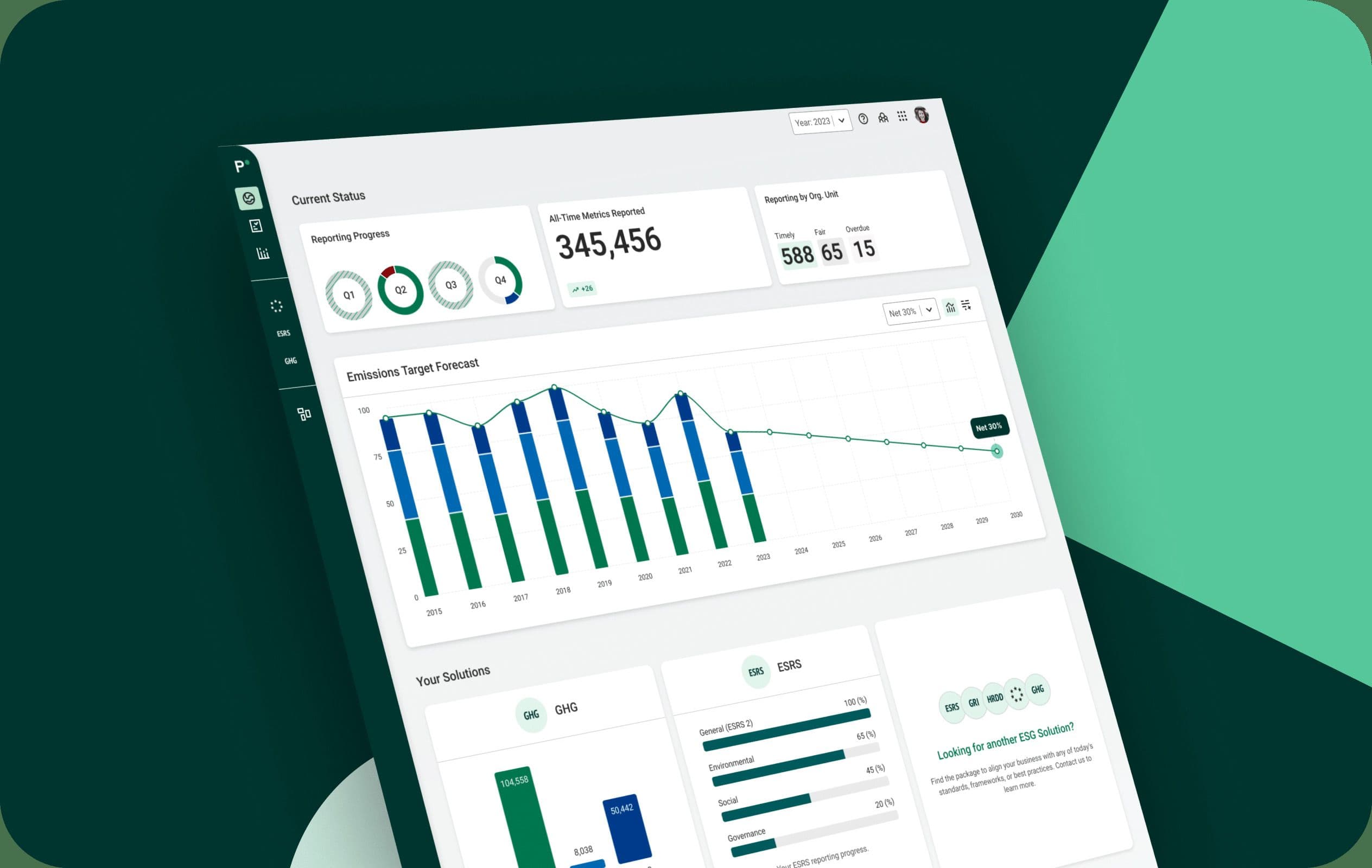
Workiva integrates finance, governance, sustainability and risk records on one platform. With strong ESG software functions, it centralizes data, supports structured ESG reporting, and aligns disclosures with widely used ESG reporting solutions.
Key Features
- Multi-framework reporting with options for various ESG frameworks
- Integrated data management with audit trails
- Dashboards showing emissions, waste, diversity and governance metrics
- Collaboration for HR, operations, sustainability and compliance teams
- Workflow management for reviews, sign-offs, evidence storage and version history
Advantages
Workiva is widely adopted by global firms seeking structured ESG compliance. It supports large datasets, offers strong governance tools and provides structured reports that match industry standards. The platform simplifies the ESG reporting process for large enterprises, especially those preparing detailed sustainability reports across regions.
Drawbacks
Pricing is enterprise-level, so smaller firms may find it expensive. Implementation can require training, and highly specialized industries may need configuration.
Pricing
Custom enterprise pricing based on modules and number of users.
Persefoni Carbon Management Platform
Persefoni focuses strongly on carbon and climate disclosures, supporting firms in measuring emissions and reducing their carbon footprint.
Key Features
- Scope-based emissions tracking
- Support for investor disclosures
- Scenario analysis for climate-risk forecasting
- Tools to interpret ESG data linked to emissions
Advantages
Persefoni is well suited for firms prioritizing environmental themes and regulatory disclosure under climate-related rules. It supports esg initiatives focused on tracking emissions, forecasting risks and aligning environmental strategy with corporate targets.
Drawbacks
It focuses heavily on environmental information, so companies requiring broad social and governance coverage may need additional platforms. Scope 3 emissions tracking may take time, depending on supplier inputs.
Pricing
Subscription-based; varies by company size and emissions complexity.
💡 Not sure which platform is right for you? Calculate your ROI with our interactive tool to see potential savings and payback period.
or
→ Compare all vendors side-by-side with our interactive tool
Novata ESG Data & Reporting Platform
Novata is designed for companies managing large supplier networks and needing structured information from vendors. It helps firms gather ESG information across global supply chains.
Key Features
- Supplier questionnaires for responsible sourcing
- Centralized hub for environmental, social and governance information
- Templates aligned with diverse ESG reporting expectations
- Supplier-performance dashboards
Advantages
Novata is effective for firms needing insight into supply-chain practices and region-specific labor information. It supports social and governance ESG indicators and strengthens supply-chain oversight, especially where organizations aim to improve supplier sustainability practices.
Drawbacks
Supplier participation determines data quality. Smaller firms may not need the full supplier-engagement module.
Pricing
Tiered subscription, based on the number of suppliers and reporting scope.
EcoVadis Sustainability Rating Platform
EcoVadis provides third-party ESG ratings, offering independent evaluation across environmental, labor, ethics and procurement areas.
Key Features
- Comprehensive ESG scoring
- Peer benchmarks
- Evidence-based assessments
- Supplier-assessment tools
Advantages
Useful for firms needing verified information for clients, investors and regulators. Independent ratings can strengthen a company’s ESG credibility and reflect the organization's commitment to sustainability.
Drawbacks
The rating process can be time-intensive, requiring documentation and evidence. Firms seeking long-term operational data tracking may need complementary tools.
Pricing
Fee-based model depending on company size and scope of review.
Diligent ESG & Sustainability Solution
Diligent combines governance, ethics and sustainability into a single platform, supporting organizations with strict audit expectations or regulated-industry requirements.
Key Features
- Governance metrics tracking and audits
- Logs for ethics training and policy adherence
- Integration with corporate-wide ESG modules
- Tools for regulatory compliance, oversight and policy management
Advantages
Well suited for firms in regulated industries where governance and compliance oversight are essential. Diligent connects governance processes with broader environmental social and governance reporting, supporting cross-departmental coordination.
Drawbacks
Less extensive environmental or social modules compared with specialized tools. Integration and configuration may require coordination across teams.
Pricing
Enterprise-level pricing with custom quotes.
How to Select the Right ESG Tool for Your Company
The best tool depends on firm size, industry, data requirements and sustainability priorities.
- Small firms may prefer simpler solutions focusing on emissions tracking or reporting frameworks suited to their region.
- Larger firms with international operations benefit from systems supporting multiple esg frameworks, broad datasets and detailed evidence logs.
- Companies seeking finance-related disclosures require tools aligning with investor expectations, financial industry norms and specific compliance frameworks.
- If governance, ethics or audit readiness is a priority, governance-focused platforms with detailed controls and compliance management functions can be helpful.
- Pricing models vary widely, so firms should compare subscription costs against expected savings and reduced operational workload.
Tools supporting ESG-compliant disclosures can strengthen trust, build competitive advantage, and help interpret a company’s wider sustainability direction. Firms should also evaluate compatibility with risk teams, finance units and sustainability departments to keep the reporting process efficient and coordinated.
Meantime, want to know whether there are other ESG compliance solutions in the market, if the ones mentioned above are not suitable for your business? Don't worry — our ESG solutions page connects you with the best ESG software to improve sustainability in your business, based on your needs, size, budget, etc.
Trends in ESG Reporting and Compliance Tools (2026 Onwards)
Several trends define the 2026 landscape:
- Rising demand for systems supporting multi-region rules and sector-specific ESG regulations.
- Growing focus on transparent supply-chain assessments across environmental, social and governance dimensions.
- Increased integration of risk, audit and governance modules to connect sustainability with wider risk management functions.
- Emphasis on user-friendly architecture that helps newcomers start ESG work without heavy expertise.
- More effort to validate information and validate data securely across teams and suppliers.
As expectations evolve, firms with advanced, scalable tools can manage larger datasets, respond confidently to stakeholder expectations, and maintain clear oversight.
Conclusion
Managing ESG information requires consistent systems across environmental, social and governance themes. Tools that centralize ESG data, align with recognized ESG frameworks, support collect ESG data, and manage region-specific rules help firms produce structured disclosures with fewer errors.
Workiva, Persefoni, Novata, EcoVadis and Diligent each offer different strengths, from carbon tracking to governance oversight and supply-chain transparency. Selecting the right solution depends on organizational structure, sustainability priorities, regional obligations and budget.
With the right software, firms maintain strong ESG compliance, interpret trends effectively, and support long-term strategies that reflect the company’s performance, values and sustainability direction. ESG reporting compliance enhances transparency, manages risks, and attracts capital by displaying a company's commitment to sustainable and ethical practices.
Frequently Asked Questions (FAQs)
What is an ESG reporting tool?
An ESG reporting tool helps companies track, manage, and report environmental, social, and governance data. It simplifies compliance with regulations and improves transparency for investors and stakeholders.
What are ESG compliances?
ESG compliances are rules and standards companies follow to meet environmental, social, and governance requirements. They ensure sustainable practices, ethical governance, and social responsibility.
What are the big 4 of ESG?
The big 4 of ESG usually refer to four top accounting and consulting firms—Deloitte, PwC, EY, and KPMG—that offer ESG advisory, reporting, and assurance services.
What are the 7 principles of ESG?
The 7 principles of ESG include transparency, accountability, ethical governance, sustainability, social responsibility, risk management, and stakeholder engagement. These guide companies in responsible business practices.
What is ESG reporting?
ESG reporting is the process of disclosing a company’s environmental, social, and governance performance. It helps investors, regulators, and stakeholders assess sustainability and ethical impact.
What are the 4 pillars of ESG?
The 4 pillars of ESG are environmental responsibility, social impact, governance practices, and economic performance. Together, they form a framework for sustainable business operations.
Is ESG mandatory in the UK?
ESG reporting is becoming increasingly required in the UK, especially for large companies under new disclosure rules. Smaller firms are encouraged to adopt ESG practices voluntarily.